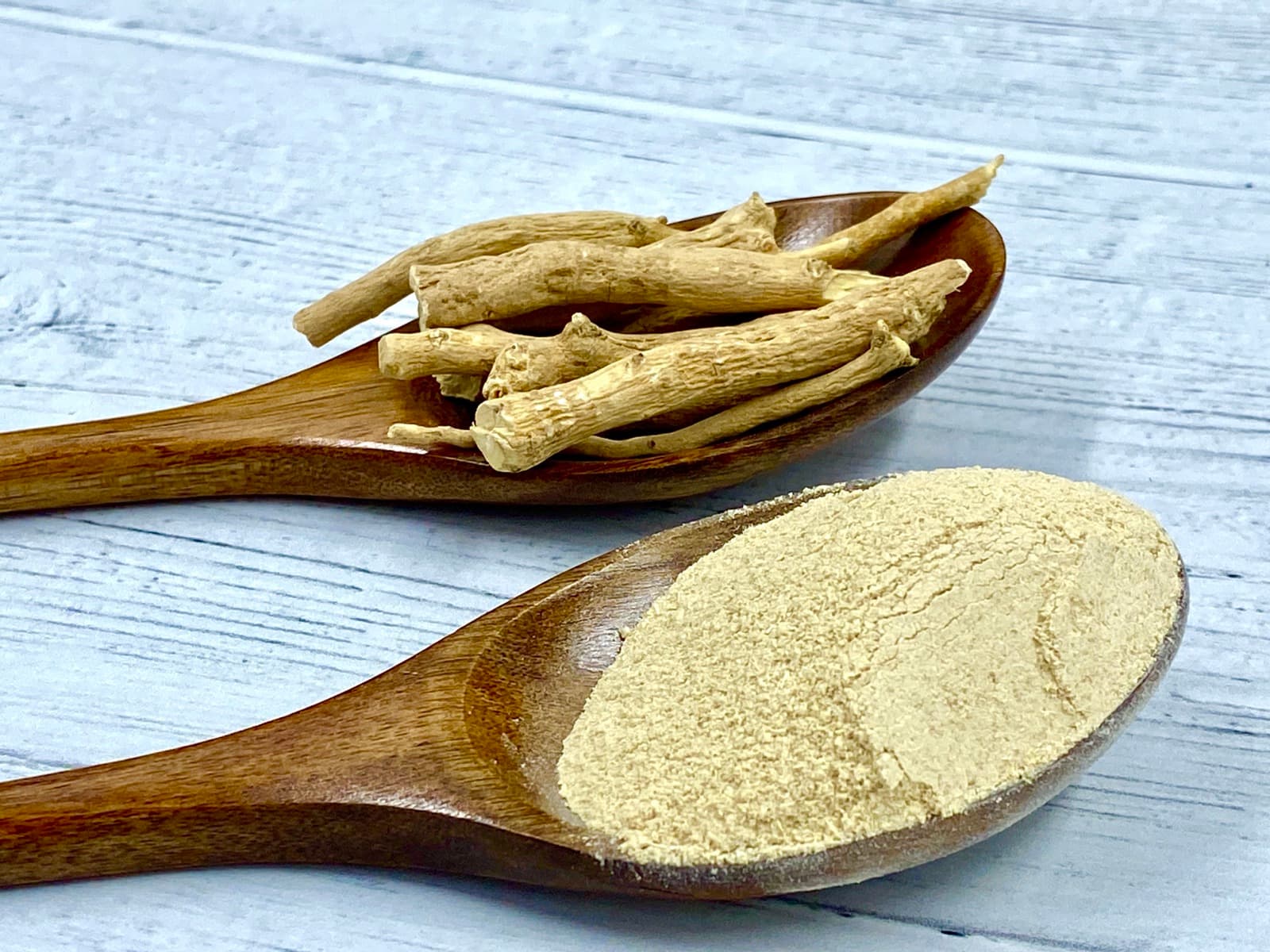
Short answer: before a botanical or herbal powder is exported, a lab usually checks that it is the right plant (identity and marker compounds), that it is dry and clean (moisture, total ash, acid-insoluble ash, foreign matter), and that it is safe (microbes such as Salmonella, heavy metals, aflatoxins and pesticide residues). The limits are not universal. They come from the destination market's rules and your buyer's specification. Use a lab accredited to ISO/IEC 17025 for each test you need, and confirm with your importer that they accept its reports.
This guide is for exporters of dried plant powders such as moringa, ashwagandha, amla, tulsi, neem, turmeric, ginger and beetroot powder, and for the buyers who receive them. It sets out the standard test panel, explains who sets each limit, shows how to check any lab's accreditation in any country, and lists simple ways to keep testing costs sensible. It makes no claims about what any herb does for health.
We are independent and do not run a lab. Email us your product list and target market and we'll help you find accredited labs whose scope fits.
Which tests does a botanical powder need for export?
Most buyers ask for tests from four groups: identity (is it the right plant?), cleanliness (is it dry and free of dirt?), microbes (is it hygienic?) and contaminants (metals, mould toxins and farm chemicals). The World Health Organization's Quality control methods for herbal materials (2011) describes methods for each of these families.
| Test | What it tells you | Who sets the limit |
|---|---|---|
| Identity (look, microscope, thin-layer chromatography fingerprint) | That the powder is the plant named on the label and not a look-alike or a cheaper filler | The buyer's specification |
| Marker compounds | Strength: how much of the compounds typical of that plant part is present | The buyer's specification |
| Moisture (loss on drying) | Wet powder can go mouldy, and water adds weight the buyer pays for | The buyer's specification and the destination market's product rules, where they exist |
| Total ash | High ash points to sand, soil or other minerals mixed in | The buyer's specification |
| Acid-insoluble ash | The part of the ash left after boiling with dilute hydrochloric acid: mostly sand and silica, so a direct dirt check | The buyer's specification |
| Foreign matter | Stones, stems, straw, insects and anything else that is not the named plant part | The buyer's specification |
| Total viable count (total plate count) | The overall germ load: how clean drying, grinding and packing were | The destination market's rules and the buyer's specification |
| Yeast and mould | Spoilage organisms and mould growth | The destination market's rules and the buyer's specification |
| Pathogens, such as Salmonella | Organisms that can make people seriously ill | The destination market's rules and the buyer's specification |
| Heavy metals: lead, cadmium, arsenic, mercury | Toxic metals taken up from soil or water, or picked up as dust and in grinding | The destination market's contaminant rules and the buyer's specification |
| Aflatoxins | Toxins made by moulds, a risk in crops that were badly dried or badly stored | The destination market's contaminant rules and the buyer's specification |
| Pesticide residues | Farm sprays left on the crop | The destination market's maximum residue limits and the buyer's specification |
Test families as described in WHO's Quality control methods for herbal materials (2011). We publish no limits on purpose: WHO says it cannot recommend contaminant limits, and the figures differ by market and product. Use the figures in your buyer's written specification.
Identity and strength
Identity tests prove the powder is the plant on the label. Labs compare its look and its structure under a microscope with the real plant, and many also run a thin-layer chromatography (TLC) fingerprint. Marker compounds go a step further: they show how much of the compounds typical of that plant part are present, so the buyer knows the powder's strength as well as its name.
Cleanliness: moisture, ash and foreign matter
Moisture (often reported as loss on drying) matters for two reasons: damp powder can go mouldy, and water adds weight. Total ash is what is left after the powder is burnt; a high figure points to sand, soil or other minerals. Acid-insoluble ash is the part of that ash left after boiling it with dilute hydrochloric acid. It is mostly sand and silica, so it is the most direct dirt check on the list. Foreign matter covers stones, stems, straw, insects and anything else that is not the named plant part.
Microbes
The total viable count (also called total plate count) gives the overall germ load and shows how clean drying, grinding and packing were. Yeast and mould counts show spoilage risk. Pathogen tests, such as for Salmonella, look for organisms that can make people seriously ill.
Contaminants
Heavy metals (lead, cadmium, arsenic and mercury) can come from soil, water or dust, or be picked up in grinding. Aflatoxins are toxins made by moulds, a risk in crops that were badly dried or stored. Pesticide residues are farm sprays left on the crop.
Who sets the limits?
Not WHO. Its 2011 guide says plainly: "WHO is not currently able to recommend limits for contaminants since these are too diverse and there is a lack of consensus." It includes some general suggestions, which "should be considered as a basis for establishing national limits".
So, in practice, two things decide what an export lot must meet:
- The destination market's rules. Each importing country or trading bloc sets its own limits for contaminants and pesticide residues, and some set product rules too.
- The buyer's specification. An importer's written specification lists the tests and limits it wants, and often the methods. It can ask for more than the law does.
That is why this guide gives no limits. A figure that is right for one market can be wrong for another. Ask your importer for their specification in writing, and test against it.
What ISO/IEC 17025 accreditation means
ISO/IEC 17025 is the international standard for the competence of testing and calibration laboratories. The current edition is from 2017. A lab is accredited when an independent accreditation body has assessed it against that standard.
Three points matter to an exporter:
- Accreditation is per test. ILAC (the International Laboratory Accreditation Cooperation) says accredited labs work "on products as defined in their scope of accreditation". A lab may be accredited for moisture and ash but not for pesticide residues or aflatoxins. Check the scope for each test you order.
- ILAC does not accredit labs. National accreditation bodies do. Those bodies are themselves "peer-evaluated under ISO/IEC 17011" before they sign ILAC's Mutual Recognition Arrangement (MRA).
- Recognition is wide, not automatic. The MRA's aim is "accredited once, accepted everywhere": signatory bodies accept each other's accredited results. But ILAC also says there is "no guarantee that these results will be accepted by other parties within that market", and a foreign regulator's own requirements may still apply. Check with your importer.
How to check any lab's accreditation, in any country
The same four steps work wherever the lab is.
| Step | What to do | Why |
|---|---|---|
| 1. Find the accreditation body | Open ILAC's signatory search and choose the country (ILAC calls it the economy) where the lab is | ILAC does not accredit labs itself; national accreditation bodies do, and ILAC lists the ones that signed its agreement |
| 2. Open the body's directory | Follow the link from the signatory search to that body's list of accredited labs | ILAC says the accreditation bodies keep the lists of accredited laboratories |
| 3. Read the lab's certificate and scope | Open the lab's entry and download its scope of accreditation | Accreditation covers the tests named in the scope, not everything the lab does |
| 4. Match every test you need | For each test on your buyer's specification, check that the scope names the test, a matching product type and the method | A lab can be accredited for moisture but not for pesticide residues or aflatoxins |
Based on ILAC's MRA, signatory and FAQ pages, read on 22 Oct 2026.
ILAC's signatory search lists the accreditation bodies that have signed the MRA, and can be searched by organisation name, economy and accreditation scope. In the United Arab Emirates, for example, ILAC's list (updated 29 December 2025) names two signatories for testing under ISO/IEC 17025: the Emirates International Accreditation Centre (EIAC) and the Ministry of Industry and Advanced Technology's Emirates National Accreditation System (MoIAT-ENAS).
What importers in strict markets ask for
Buyers in markets with strict food and import rules, such as the Gulf (GCC) countries including the UAE, the European Union and the United States, commonly ask for a certificate of analysis from an accredited lab that reports each test on their specification against their limits. What exactly they want differs by buyer, product and use, so treat this as a starting list of questions, not a rule:
- Which tests and limits are on your specification? (Ask for it in writing.)
- Which methods do you accept for each test?
- Must the lab be accredited for every test, and do you accept labs in the exporting country?
- Do you want one report per lot, and how should the lot be identified on it?
- Who draws the sample, and do you want a retained reference sample kept?
Write the answers into your contract or purchase order. A test report the buyer did not ask for, or from a lab they do not accept, is money spent twice.
How to draw a representative sample
A test result is only as good as the sample. WHO's 2011 guide sets out a sampling method for herbal materials:
- Choose the containers. If the batch has five containers or fewer, sample each one. From 6 to 50 containers, sample five. Over 50, sample 10%, rounding the number of containers up to the nearest multiple of 10.
- Sample each container three times. Take material from the top, middle and bottom. In sacks, take the first from at least 10 cm below the top, and the second and third from the middle and bottom by cutting into the side.
- Mix and quarter. Pool the samples, mix them, and divide the heap diagonally into four equal parts. Keep two opposite parts, mix again, and repeat until you have the amount needed, to within ±10%. WHO gives "100–200 g for flowers and up to 10 kg for certain roots" for this step.
- Keep a reference sample. WHO says "a portion of each final sample should be retained to serve as reference material, which may also be used for re-test purposes". Label it, seal it and store it.
For goods already in retail packs, WHO's method takes two consumer packages at random, or 10 consumer packages from small batches of one to five boxes. Ask the lab how much powder each test needs, and agree with the buyer who draws the sample.
How to keep testing costs sensible
Testing is a real cost per lot. These steps keep it under control without cutting corners:
- Test only what the specification lists. Extra tests add cost without helping the sale.
- Group products. Where several powders need the same tests, plan them together.
- Ask for multi-sample rates. Ask each lab, in writing, what it charges for several samples or lots at once.
- Screen hygiene and cleanliness first. WHO notes that when the total count exceeds the set level, "it is unnecessary to proceed with determination of specific organisms; the material should be rejected without being subjected to further testing". Running the simpler tests first (moisture, ash, acid-insoluble ash, total count) can stop a bad lot before you pay for metals, aflatoxin or pesticide tests.
- Check the scope before you send. A result from a test outside the lab's accreditation may have to be repeated at another lab.
- Keep the reference sample. If a result is disputed, you can re-test without sampling the lot again.