Buying guide
Ghee making machines: how a ghee plant works and what to buy
By Editorial team · Updated
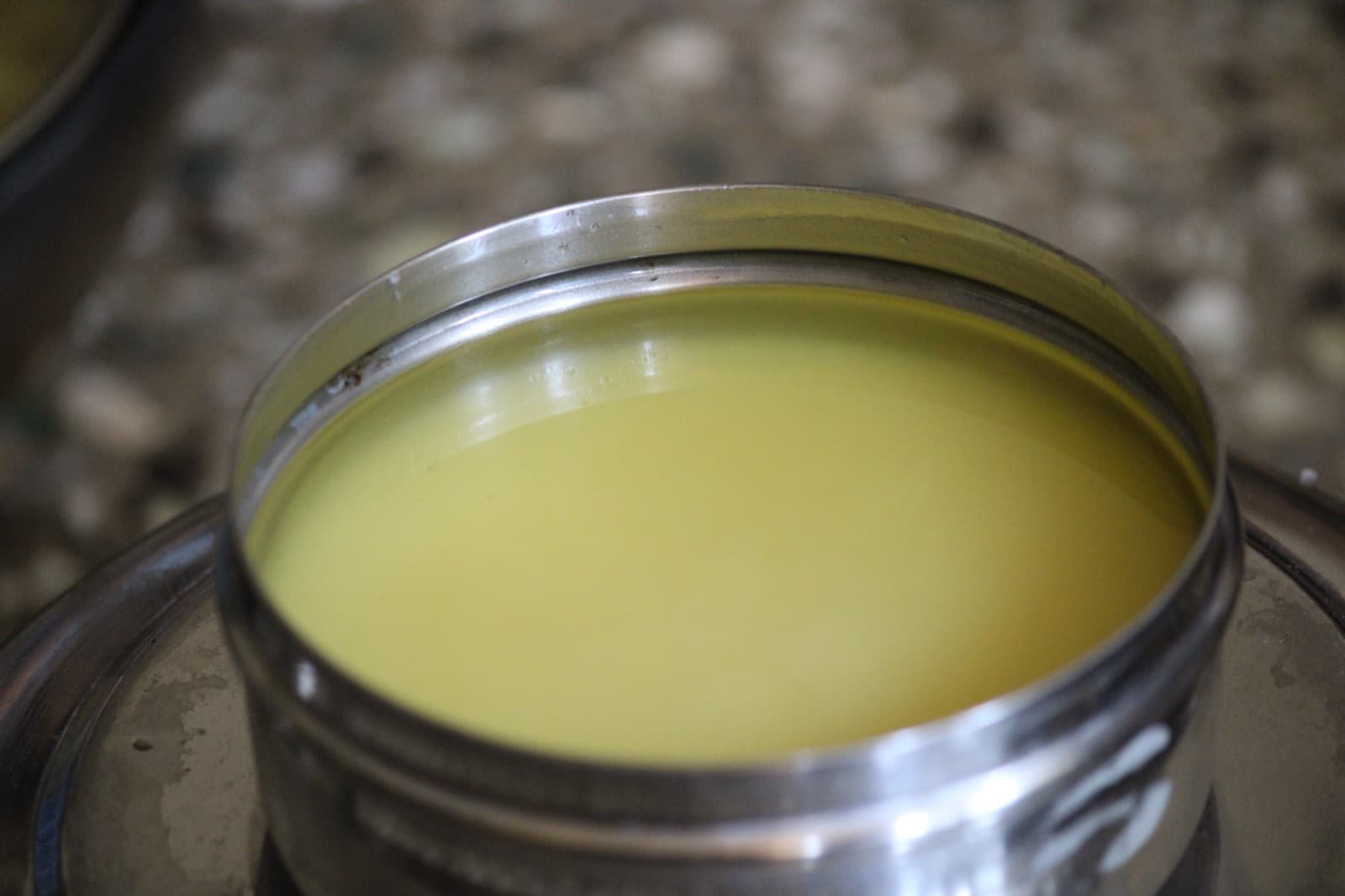
Short answer: ghee is made at scale in three main ways, and each needs a slightly different set of machines.
- Creamery butter method (the standard in most organised dairies): cream separator, butter churn, butter melter, ghee kettle, settling tank, clarifier, storage tank and filler.
- Direct cream method: cream separator, then high-fat cream goes straight into the ghee kettle. No churn is needed.
- Desi or bilona method (from curd): curd churn for makkhan, then a kettle or pan and decanting. It suits small units.
In every case, the heart of the plant is the ghee kettle: a stainless-steel, steam-jacketed vessel with a stirrer, in which butter or cream is heated until the water has boiled off. Ghee powder needs a separate drying line on top of this.
The National Institute of Food Technology Entrepreneurship and Management (NIFTEM) lists five methods in its PMFME write-up on ghee: indigenous (desi), direct cream, creamery butter, pre-stratification and continuous. The National Dairy Development Board (NDDB) describes the same five. This guide follows the plant line step by step, then covers machine types, scale, ghee powder, licences and the makers whose own sites show these machines.
How does a ghee plant work, step by step?
NIFTEM's flow chart for industrial ghee, with the temperatures it gives, runs like this:
- Milk reception, filtering and chilling. Milk is weighed, filtered and chilled below 5 °C, then stored in silos.
- Cream separation and pasteurisation. A centrifugal cream separator splits cream from skim milk. NIFTEM gives cream pasteurisation at 90 ± 2 °C.
- Churning. A butter churn turns the cream into butter and drains the buttermilk. Plants that buy butter start at the next step.
- Butter melting. Butter is melted at about 65 °C in a hot-water jacketed vat (NIFTEM), or at 60 to 80 °C in a butter melter (NDDB).
- Pre-stratification (optional). The melted butter is held still at 80 to 85 °C for about 30 minutes. It splits into three layers, and the bottom layer, which carries most of the water, is drained off. NDDB says this means less heating, less ghee residue and ghee with lower free fatty acids.
- Cooking in the ghee kettle. The butter is boiled with steam in the ghee kettle. NIFTEM gives 107 to 109 °C; NDDB gives a final temperature of about 114 ± 2 °C. The operator stops when the froth dies down and the curd particles turn golden brown, which is when the ghee flavour develops.
- Settling. The ghee and residue rest for 15 to 20 minutes in the kettle, then about 2 hours in settling vats (NIFTEM).
- Clarification and filtration. A centrifugal ghee clarifier, run at about 70 °C (NIFTEM), or an oil filter removes the fine residue.
- Storage and testing. Clarified ghee goes to a jacketed storage tank, where quality control samples it against the standard.
- Filling and granulation. Ghee is filled warm, at 40 to 45 °C, into tins, glass or PET jars or pouches. Filled tins then go to a granulation room held at 18 to 22 °C, where the ghee granulates.
- Packing and dispatch. Packs are cartoned and dispatched.
Two machines in this line are covered in detail elsewhere on this site: pasteurisers for the cream, and filling machines for the packs.
Which method needs which machines?
NDDB compares the five methods by fat recovery and equipment. NIFTEM gives the energy used per kilogram of ghee. The figures below are as each source states them.
| Method | Key equipment (NDDB) | Fat recovery | Energy, kcal per kg ghee (NIFTEM) | Scale (NDDB) |
|---|---|---|---|---|
| Desi / bilona | Butter churn (curd is churned) | 88–90% (NDDB); 80–85% (NIFTEM) | 1,700 traditional; 1,500 improved | Small |
| Direct cream | Cream separator | 92% (NDDB); 85–95% by cream fat (NIFTEM) | 1,325 (40–50% fat cream); 850 (65–85% fat) | Large |
| Creamery butter | Cream separator, butter churn | 88–92% (NDDB); 92% (NIFTEM) | 525 | Large |
| Pre-stratification | Cream separator, butter churn | 93% (NDDB); 92% (NIFTEM) | 400 | Large |
| Continuous | Scraped-surface heat exchanger, clarifier | 93% (NDDB); 92% (NIFTEM) | 325 | Very large |
Sources: NDDB Technews No. 99 (comparison table after Rajorhia 1993 and Aneja et al. 2002); NIFTEM PMFME ghee write-up, Table 4. The two sources give slightly different recovery figures.
For the direct cream method, NDDB recommends cream of 70 to 80% fat, because thinner cream means longer heating, more fat lost in the residue (4 to 6%) and a risk of a caramelised flavour. The continuous method replaces the batch kettle with scraped-surface heat exchangers and vapour separators, followed by a centrifugal clarifier. NDDB notes it was developed because batch kettles use more energy, are harder to clean and lose more ghee in handling.
The machines, one by one
| Machine | Job in the line | Capacity as makers state it | Power as makers state it | What to ask |
|---|---|---|---|---|
| Butter melter | Melts butter blocks at 60–80 °C before the kettle | 50–350 litres (Dairy Man Engineering) | 3 kW electric, single phase (Dairy Man Engineering) | Heating medium, agitator, how it feeds the kettle |
| Ghee kettle / boiler | Boils off water and develops flavour (107–116 °C by source) | 130 litres, gas-fired (Dairy Man Engineering) | — | Steam or direct fire, jacket pressure, agitator, tilting or bottom outlet, gauges |
| Settling tank | Lets residue settle; holds ghee warm | — (SS 304, double wall, two compartments: Dairy Man Engineering) | — | Volume against batch size, jacket, outlet height |
| Ghee clarifier | Spins out fine residue at about 70 °C | 150, 250 and 750 litres an hour (Mahesh Eng. Works) | 0.75 HP, 0.50 HP and 1 HP (Mahesh Eng. Works) | Disc count, bowl cleaning, CIP option, single or three phase |
| Ghee filling machine | Fills tins, jars or pouches at 40–45 °C | — (Nichrome lists ghee for its pouch, jar and tin fillers) | — | Viscous filler type, accuracy at your pack size, hot-fill rating |
| Spray dryer (ghee powder only) | Dries a fat-and-carrier emulsion into powder | — (GEA and Tetra Pak publish no capacities on the pages read) | — | Trials on your recipe, free-fat and flow of the powder, cleaning |
“—” means no maker page we read gives the value. Figures read on the makers’ own sites on 21 Oct 2026.
Check the steel in every product-contact part. Mahesh Eng. Works tells buyers to check for food-grade SS 304 or 316 in the milk-contact parts, and the Dairy Man Engineering kettle, melter and settling tank are listed in SS 304.
Small unit, semi-automatic or full plant?
Small units usually start with one batch kettle and a filter, and add a clarifier when volume grows. Dairy Man Engineering lists a 130 litre ghee making machine (SS 304, two gas burners, tilting or non-tilting) and a separate ghee melting machine.
Semi-automatic set-ups add a butter melter, a settling tank, a clarifier and a filling machine around one or two steam kettles. Steam-heated kettles need a steam boiler.
Full plants run from milk reception to cartoning, with cream separation, pasteurisation, churning, CIP cleaning and an effluent treatment plant. Very large plants may use the continuous method.
Most makers quote on request. Mahesh Eng. Works, for example, says its prices depend on capacity, motor and phase, steel grade and options such as a CIP attachment. The only maker we found that publishes prices on its own site is Dairy Man Engineering, Coimbatore:
| Item (Dairy Man Engineering) | As listed | Listed price |
|---|---|---|
| Ghee making machine | 130 litres, SS 304, gas-fired | ₹1,30,000 per piece |
| Ghee melting machine | 50–350 litres, 3 kW, SS 304 | ₹1,50,000 per unit |
| Ghee storage and settling tank | SS 304, double wall, top agitator | ₹1,70,000 per piece |
| Mini ghee plant | Capacity “100” (unit not stated), 3-phase 440 V | ₹16,00,000 per unit |
| Ghee processing plant | 250 kg a day | ₹50,00,000 per piece |
Prices as shown on dairymanengg.in on 21 Oct 2026. The site does not say whether GST, freight or installation are included. Not an offer from us, and not a market average.
Making ghee powder: the extra line
Ghee powder is not made on ghee machines. It needs a drying line after the ghee plant:
- Emulsion tank. Ghee is mixed with water and carrier solids into an emulsion, kept warm and stirred.
- Homogeniser. A homogeniser breaks the fat into fine droplets before drying.
- Spray dryer. The emulsion is atomised into hot air and dries into powder. GEA and Tetra Pak both make spray dryers for dairy powders.
- Cooling, sieving and packing. The powder is cooled, sieved and packed, for example on a form-fill-seal machine for retail packs.
More fat makes a powder harder to get right. A review of fat-filled dairy powders by Vignolles and colleagues (Lait, 2007) says that raising the fat content brings off-flavours and poorer wetting and flow. It found that heat treatment, homogenisation, drying and storage all affect the result. So ask any spray-dryer maker for a trial on your own recipe, and for the free-fat and flow results of the powder. For what ghee powder is, how buyers specify it and who makes it, see our sister guide on ghee powder.
Licences and rules, in short
- FSSAI registration or licence. Every food business must be registered or licensed with FSSAI before it makes or sells food. NIFTEM's write-up sets out the registration route for petty food businesses and the hygiene rules for dairy plants.
- The ghee standard. FSSAI's standard for milk fat products (regulation 2.1.8, compendium Version XXV of 23 September 2022) says ghee must be made only from milk or milk products, with no added flavour, colour or preservative. Milk fat must be at least 99.5%, moisture at most 0.5% and free fatty acids (as oleic acid) at most 2.0%, and the Baudouin test must be negative. The same table sets a Butyro-refractometer reading of 40 to 44 at 40 °C, a Reichert Meissl value of at least 24 and a fatty acid profile. Check the current FSSAI compendium for later amendments before you design your tests.
- Effluent. NIFTEM describes a three-stage effluent treatment plant, with effluent coming from CIP chemicals (caustic and nitric acid), filter backwash and the boiler.
- Packaging. NIFTEM lists HDPE bottles and jars, PET, aluminium-foil laminates and tins of 250 g to 15 kg for ghee.
The NIFTEM PMFME write-up is the official reference for small ghee units under the PM Formalisation of Micro Food Processing Enterprises scheme. Read it before you prepare a project report.
Who makes ghee machines?
We list only makers whose own website shows the machine. Inclusion is not a ranking or a recommendation.
| Maker | Where | Ghee machines on its own site | Prices on its site |
|---|---|---|---|
| Mahesh Eng. Works | Kalol, Gandhinagar, Gujarat, India | Ghee clarifiers GC-150, GC-250, GC-750; also cream separators, butter churners, homogenisers, packing machines | No, on request |
| Dairy Man Engineering | Irugur, Coimbatore, Tamil Nadu, India | Ghee making machine, ghee melting machine, settling and storage tank, mini ghee plant, ghee processing plant | Yes (see above) |
| Nichrome India | Pune, Maharashtra, India | Pouch (VFFS, HFFS, pick-fill-seal), jar and tin filling for ghee and other viscous products | No |
| GEA | — | Spray dryers for food and dairy powders (for a ghee powder line) | No |
| Tetra Pak | — | Spray dryers for dairy, whey and plant-based powders (for a ghee powder line) | No |
Read on each maker’s own site on 21 Oct 2026. “—”: the page read does not say. Marketplace listings (IndiaMART, TradeIndia and similar) are left out.
Nichrome's form-fill-seal machines are also listed on this site: see Nichrome's maker page. If you make ghee kettles, clarifiers, fillers or spray dryers and want to appear here, ask about a Featured Partner listing. Paid listings are always labelled "Featured Partner · paid placement" and never change the order of the list.
What to ask a ghee machine maker
Send every maker the same brief: milk, cream or butter per day, the method, your target pack sizes, and whether you want ghee powder later. Then ask:
- Which method does the quote assume, and what fat recovery do you expect on my raw material?
- What is the batch size and cycle time of the kettle, and what steam pressure does it need?
- Which parts touch the product, and are they SS 304 or SS 316?
- How is residue removed: settling, filter, clarifier, or all three?
- How is the line cleaned, and is there a CIP option?
- What does the price include: GST, freight, installation, training, spares?
- Who supplies the boiler, the effluent treatment plant and the filling machine, if not you?
Buying ghee to sell, rather than making it?
If you are comparing branded ghee prices, our sister site has a dated table of ghee prices in India, read brand by brand.