Analysis
Food processing, facts vs fear: the science behind five methods
India's food processing ministry says milling, pasteurisation, heating, fermentation and freezing make food safer. What the evidence supports, and its limits.
By Editorial team ·
On 1 October 2026, India's Ministry of Food Processing Industries (MoFPI) and NIFTEM-Kundli ran a newspaper advertisement titled "Food Processing Realities: Separating Facts from Fear". It sets traditional and industrial versions of five operations side by side (milling, pasteurisation, thermal processing and drying, fermentation and freezing) and closes with the line "The same food. More possibilities. For a healthier tomorrow." The advertisement follows a set of frequently asked questions on processed foods that the ministry prepared with NIFTEM-Kundli and an expert committee, which says public perception of the sector is "often influenced by misinformation and media-driven myths".
Below, we take each claim in turn, name the machines that do the work, and set out what the evidence supports and where it stops.
Does milling make grains easier to digest?
The claim: milling adds variety and makes grains edible and easy to digest, with better nutrient absorption.
Traditional and industrial: the household version is the stone chakki grinding wheat into atta. In a plant, the same job is done by roller mills, hammer mills and pulverisers, with sifters to separate the fractions.
What the science says: milling turns whole grains and pulses into flours that can become atta, besan or sattu, and the ministry's own FAQ describes this as improving digestibility and utility. The same FAQ also says that peeling, milling and refining can remove the bran, which is rich in fibre, B vitamins and minerals. A 2023 study in Nutrients measured this in wheat: zinc, iron, fibre and protein were highest in the bran fractions and lowest in refined flour, because milling removes most of the bran and germ. So milling makes grain more versatile and easier to cook with, while the degree of refining decides how much fibre and mineral content reaches the plate.
We do not yet have a machine page for flour mills.
Does pasteurisation make milk safe?
The claim: controlled heat destroys harmful microorganisms and helps extend shelf life, making milk safe for all ages.
Traditional and industrial: at home, milk is boiled. A dairy uses a pasteuriser, usually a plate heat exchanger that heats milk to a set temperature, holds it for a set time and cools it straight away, often with a homogeniser in the same line.
What the science says: the US Food and Drug Administration states that pasteurisation "effectively kills raw milk pathogens without any significant impact on milk nutritional quality". The FDA lists pathogens found in raw milk, including Salmonella, E. coli O157:H7, Listeria monocytogenes and Campylobacter, and says children, pregnant women, older people and people with weakened immune systems are most at risk. Pasteurised milk still has to be kept cold. In India, FSSAI's Schedule 4 hygiene rules for dairy require pasteurised milk to be cooled immediately to 4 °C or lower and stored at no more than 5 °C until it leaves the plant.
Read more about pasteurisers and homogenisers.
Does cooking tomatoes increase lycopene?
The claim: thermal processing and drying kill microbes and improve digestibility, and heating tomatoes can increase lycopene bioavailability.
Traditional and industrial: at home this is cooking a tomato gravy or sun-drying produce. In a plant, the equivalents are hot-break tomato systems, evaporators, retorts, belt and tray dryers, and continuous ovens.
What the science says: the microbial point is basic food safety. The WHO estimates that 866 million people fall ill each year from contaminated food, and links several pathogens to raw or undercooked foods. The lycopene claim is well supported. In a 1997 human study in the American Journal of Clinical Nutrition, tomato paste gave a 2.5-fold higher peak of lycopene in the blood and a 3.8-fold higher total response than the same dose from fresh tomatoes. A 2002 study in the Journal of Agricultural and Food Chemistry heated tomatoes at 88 °C and found bioaccessible trans-lycopene and total antioxidant activity rose with heating time. The same study found vitamin C fell, by about 29% after 30 minutes. Heat helps some nutrients and costs others, and the ministry's FAQ notes that vitamin C can also be lost during drying.
For continuous baking lines, see tunnel ovens. We do not yet have pages for dryers or retorts.
Are fermented foods good for gut health?
The claim: fermentation improves taste, texture, nutrition and gut health.
Traditional and industrial: dahi set overnight in a pot, idli batter left to rise. Industrially, fermentation runs in temperature-controlled fermentation tanks, incubation rooms for set curd, and proofers for bread dough.
What the science says: taste, texture and keeping quality are long established. The ministry's FAQ adds that fermentation can lower anti-nutrients such as phytates, which improves the availability of some minerals. The gut-health claim needs care. A 2021 consensus statement from the International Scientific Association for Probiotics and Prebiotics says fermented foods and probiotics "cannot be used interchangeably". Many fermented foods hold no live microbes by the time they are eaten, because bread is baked and most beers and wines are filtered. Yoghurt and cultured milks have more than 20 randomised trials behind them, while for most other fermented foods few human studies exist. One encouraging trial, published in Cell in 2021, gave 18 healthy adults a diet high in fermented foods and saw gut microbial diversity rise and 19 inflammatory markers fall. It was a small study, and the broader question is still open.
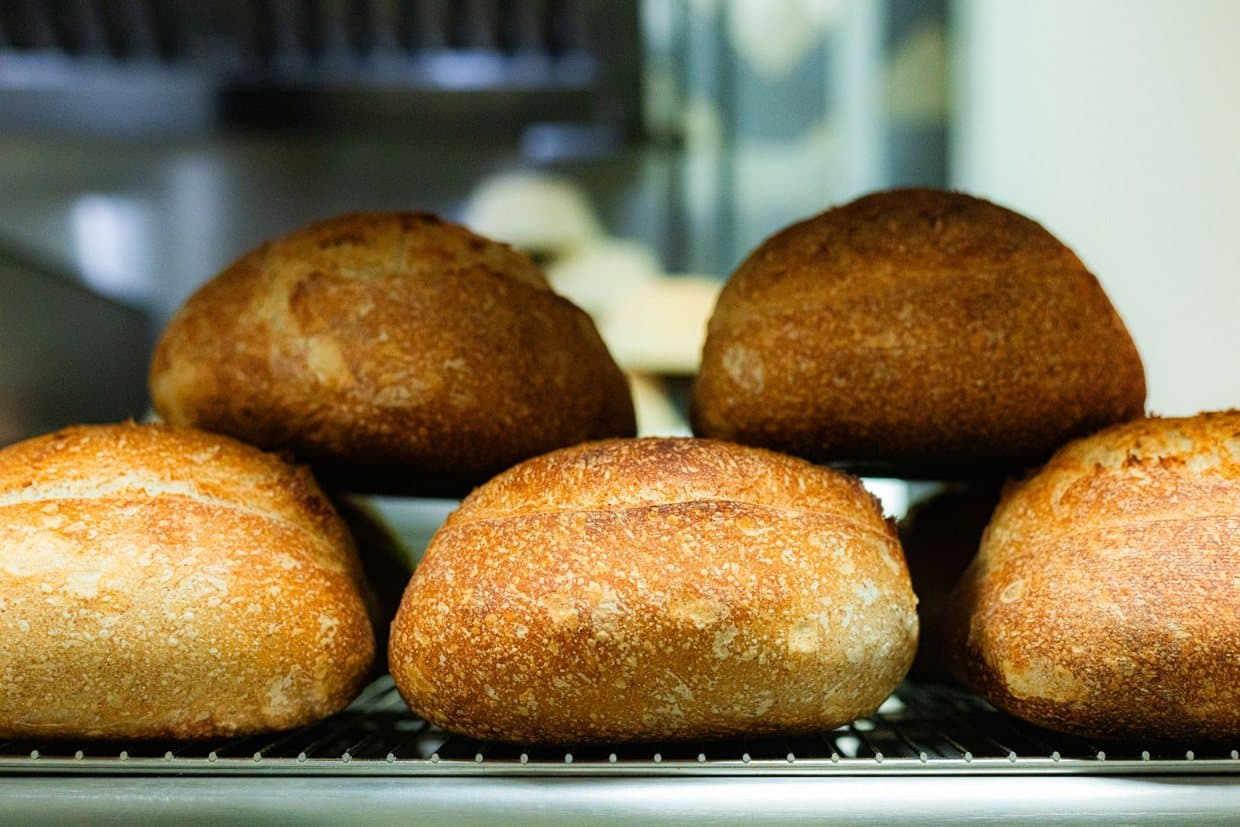
Bread fermentation starts at the dough mixer. We do not yet have a page for fermenters.
Does freezing keep nutrients?
The claim: freezing keeps food fresh for long and preserves nutrients, colour and flavour.
Traditional and industrial: traditional preservation relied on drying, salting or the household freezer. Plants use blast freezers and IQF tunnels that bring product down to temperature quickly, which keeps ice crystals small.
What the science says: a 2015 study comparing eight fruits and vegetables found the vitamin content of frozen produce "comparable to and occasionally higher than" fresh produce stored in a refrigerator, with one exception: beta-carotene dropped sharply in some frozen vegetables. A 2007 review explains the trade-off. Vegetables are usually blanched before freezing, and this short heat step causes some loss of vitamin C and B vitamins, while frozen products then lose more nutrients during long storage through oxidation. The ministry's FAQ says freezing slows microbial growth, so raw material must be clean going in.
See blast freezers.
What this means for a plant owner
The advertisement is a public message, and each line of it rests on a process step a plant has to control. Pasteurisation only protects people if time, temperature and the cooling that follows are recorded and checked, and FSSAI's Schedule 4 sets out those hygiene conditions for licensed food businesses. Nutrient retention depends on the same discipline: the ministry's FAQ points to controlling temperature, time and pressure, and to methods such as rapid freezing, as ways to limit losses. In practice, that means validated heat steps, calibrated sensors, cold-chain records and a specification stating the degree of refining. An FSSAI inspector, a buyer's auditor and any shelf-life claim all rely on those records.
Frequently asked questions
Who ran the advertisement? India's Ministry of Food Processing Industries and NIFTEM-Kundli, in newspapers on 1 October 2026.
Is pasteurised milk less nutritious than raw milk? The US FDA says pasteurisation has no significant impact on milk's nutritional quality while killing the pathogens raw milk can carry.
Do all fermented foods contain probiotics? No. Baked, filtered or heat-treated fermented foods may have no live microbes left, and the ISAPP consensus treats fermented foods and probiotics as separate categories.
Are frozen vegetables as nutritious as fresh? Studies show vitamin levels in frozen produce are usually comparable to fresh produce kept in a refrigerator, with some losses from blanching and from long frozen storage.