Multihead weighers
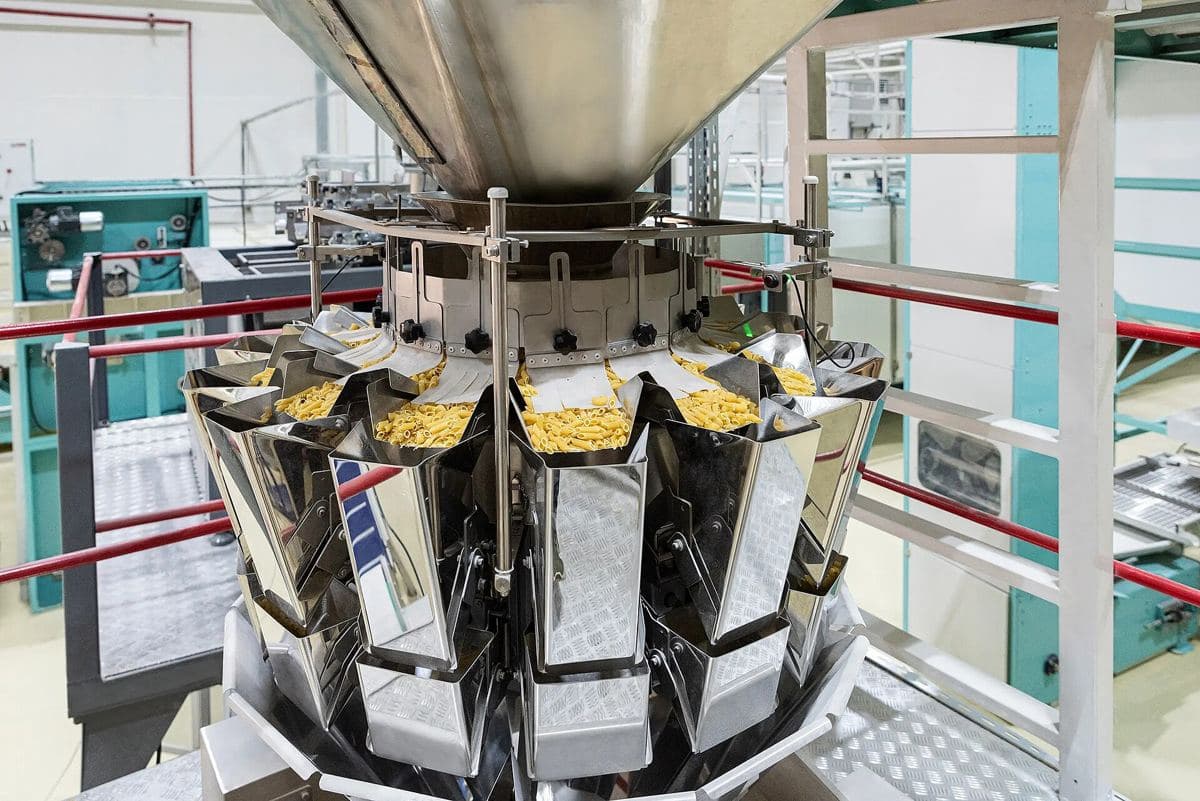
A multihead weigher is a weighing machine that divides product among many small weigh buckets and combines the buckets whose total comes closest to the target pack weight. The multihead weigher sits directly above the packaging machine, usually a vertical form-fill-seal bagger, tray sealer or container filler. Product arrives by conveyor or elevator at the top, spreads outwards from a central top cone onto radial feeders, and drops into feed buckets and then weigh buckets arranged in a ring. Each weigh bucket sits on its own load cell. For every pack, the controller calculates which combination of buckets adds up to the weight closest to the target without going under it, opens those buckets together and releases the product into the packaging machine below. The empty buckets are refilled while the next combination is chosen. Because many possible combinations are checked for each pack, multihead weighers are both fast and accurate, which reduces giveaway, the product given away above the declared weight. That is why they are the standard choice for snacks, frozen foods, confectionery and many other free-flowing or irregular products. Variants include machines with different numbers of heads, which trades speed and accuracy against cost; twin or split machines that feed two baggers; weighers with dimpled or coated contact surfaces for sticky product; screw-fed weighers for very sticky items such as fresh meat and cheese; linear weighers for granular product at lower speeds; and hygienic washdown designs for fresh and frozen foods. Mixing weighers combine several components into one pack. Multihead weighers are used for potato chips and snacks, frozen vegetables and fries, nuts and dried fruit, confectionery, cereals, salad, fresh produce, pet food and hardware items outside food. Cost and performance are driven by the number of heads, bucket size, speed, accuracy on your product, the handling of sticky, fragile or frozen product, washdown rating, and integration with the bagger. The biggest benefit usually comes from reduced giveaway and higher output, so trials on your own product are the fairest way to compare.
Where it sits in the line
Featured Partner slot · open
Be the maker buyers see first on this page
Compare models
No sourced models yet. Makers: list yours.
Buying criteria
Test on your own product. Accuracy, speed and handling differ by product, so ask for trials with your actual product, pack weights and target speeds. Choose the number of heads and bucket size for the pack range. More heads generally allow more accurate combinations at higher speed; bucket size must suit the product volume per pack. Check product handling. Sticky, fragile, frozen or wet product may need special contact surfaces, screw feeders, gentle drop heights or cold-rated components. Look at hygiene, washdown rating and tool-free removal of buckets and pans. Confirm integration with your bagger or filler, and ask how the weigher reports giveaway, rejects and throughput so you can track performance. Finally, consider changeover time between products and pack weights, stored recipes, and how easily operators can clear blockages without climbing onto the machine.
Buyers ask
How much does a multihead weigher cost?
It depends on the number of heads, bucket size, speed, washdown rating and special features such as screw feeders, dimpled surfaces or mixing capability. Machines for sticky or fresh products and hygienic washdown designs cost more. Since most of the payback comes from reduced giveaway and higher speed, compare machines on performance with your own product as well as on price.
How does a multihead weigher work?
Product is spread onto many small weigh buckets, each on its own load cell. For every pack, the controller checks the possible combinations of buckets and selects the one whose total weight is closest to the target without going under. Those buckets open together and drop the product into the packaging machine.
What is giveaway in weighing?
Giveaway is the product given away above the weight printed on the pack. Because packs must not fall short, fillers set a target above the declared weight. A more accurate weigher can run closer to the declared weight, which saves product on every pack over time.
Can a multihead weigher handle sticky products?
Yes, with the right design. Sticky products such as fresh meat, cheese, dried fruit or salad often need dimpled or coated contact surfaces, screw feeders instead of vibratory feeders, and steeper chutes. Always confirm handling with a trial on your own product.