Checkweighers
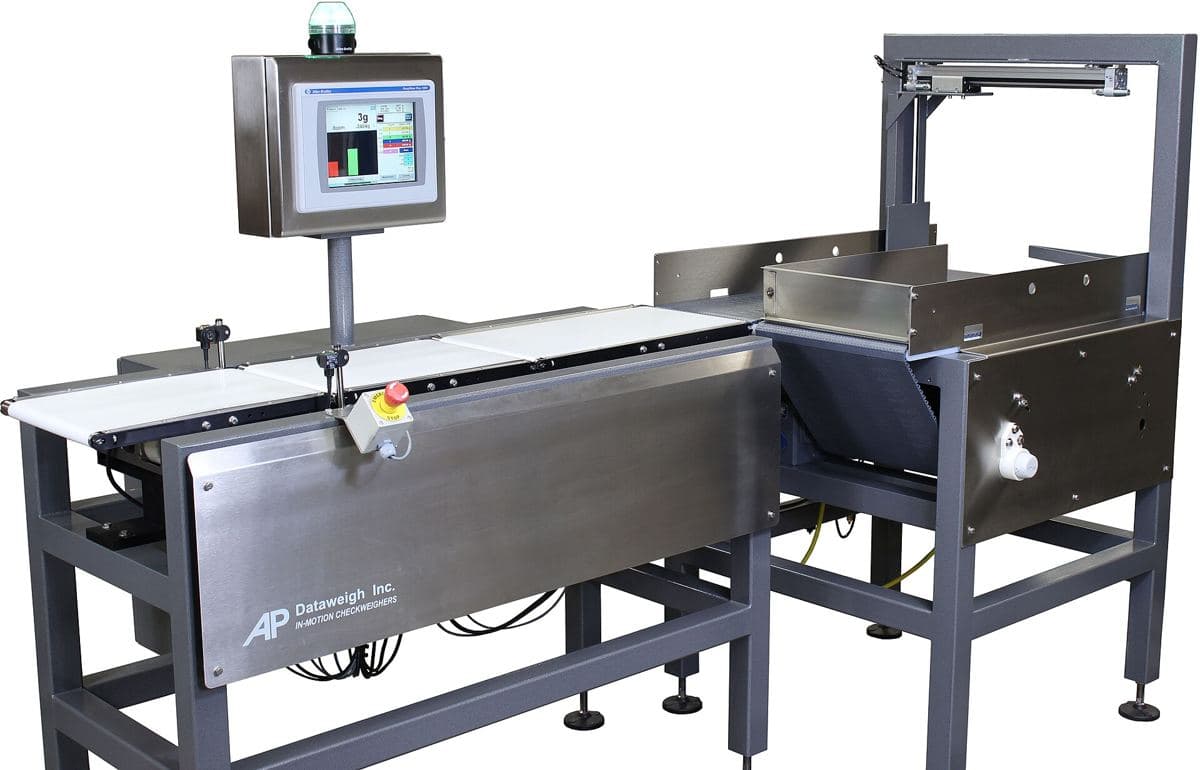
A checkweigher is an inspection machine that weighs every pack as it moves along the line and rejects any pack outside set weight limits. Checkweighers sit after the packaging machine, usually close to metal detection or X-ray inspection and before case packing. Some plants also checkweigh finished cases to confirm the count before palletising. The checkweigher's job is twofold: it protects consumers and the producer from underweight packs, and it gives production live data on how accurately the filler or weigher upstream is performing. A typical dynamic checkweigher has three conveyor sections. An infeed conveyor spaces packs correctly, a weigh conveyor mounted on a load cell or an electromagnetic force restoration cell weighs each pack in motion, and an outfeed conveyor carries a reject device such as an air blast, pusher, drop flap or diverter arm. Load-cell systems suit most food packs; force restoration cells offer higher resolution and faster settling for light packs at high speed. Checkweighers are often combined with a metal detector on one frame to save space. Many checkweighers send feedback to the filler, weigher or doser upstream, adjusting its target automatically so the line runs closer to the declared weight while staying within the law. This reduces giveaway, the product given away above the declared weight. Beyond weight, some checkweighers also detect missing items in a multipack, open flaps or packs that are out of position. In most markets the quantity on a pack is regulated. Many countries use an average-quantity approach, which sets rules for the average contents of a batch and limits the number and size of underweight packs, while others require each pack to meet a minimum. The checkweigher and its records are the plant's main evidence of compliance. Checkweighers are used for snacks, frozen foods, dairy, bakery, confectionery, ready meals, beverages and dry goods. Cost and performance depend on weighing range and accuracy at speed, pack size and stability, reject reliability, hygiene rating, data and reporting features, feedback control, and whether the checkweigher is certified for legal trade use in your market.
Where it sits in the line
Featured Partner slot · open
Be the maker buyers see first on this page
Compare models
No sourced models yet. Makers: list yours.
Buying criteria
Specify the pack range and line speed. Accuracy depends on pack weight, size, stability and speed, so ask for performance figures with your own packs at full speed. Confirm legal compliance. Check the rules for packaged quantities in each market you sell into and whether the checkweigher needs certification for legal use there. Test the reject system. It must remove every failed pack without disturbing good ones, and it should confirm that rejected packs actually reached a locked reject bin. Look at data. Weight statistics, reporting, audit trails and feedback control to the filler are where much of the value lies. Check the hygiene rating, cleaning access, footprint, combination with metal detection and the supplier's calibration and service support. Ask how rejects are counted and reported, since reject trends often reveal filler problems before they become costly.
Buyers ask
How much does a checkweigher cost?
It depends on the weighing range, accuracy, speed, weigh cell technology, hygiene rating and features. Basic load-cell checkweighers cost less than high-speed force restoration machines, washdown designs or combination units with a metal detector. Feedback control, data software, legal-for-trade certification and special reject systems add to the price.
How does a checkweigher work?
Packs are spaced on an infeed conveyor, weighed as they pass over a weigh conveyor mounted on a weigh cell, and compared with set limits. Packs outside the limits are removed by a reject device on the outfeed. Results are recorded for quality and legal records.
What is the difference between a checkweigher and a multihead weigher?
A multihead weigher portions product before it is packed, choosing combinations of weigh buckets to hit a target weight. A checkweigher inspects packs after they are sealed, confirming each one is within limits and rejecting any that are not. Most lines use both.
Can a checkweigher reduce giveaway?
Yes. By measuring every pack, a checkweigher shows how far above the declared weight the line is running. With feedback control, it adjusts the filler or weigher target automatically, letting the line run closer to the declared weight while staying within legal limits.